
Who should attend:
Emergency Medicine doctors, Paediatricians, Urgent Care clinicians, and other healthcare professionals who perform or supervise procedural sedation in and paediatric population.
Course Description:
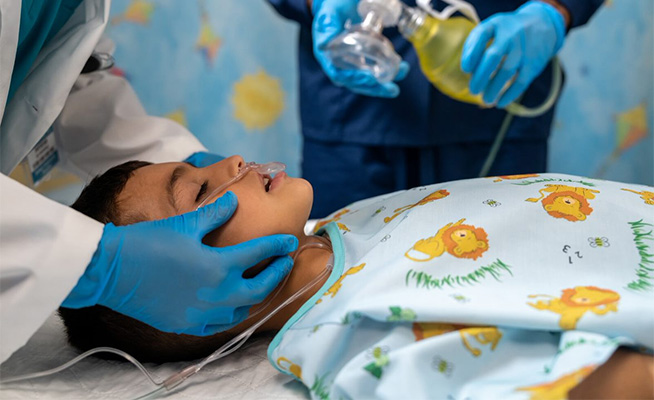
Procedural Sedation in Children is a course based on the most current evidence-based practices and incorporating patient safety and regulatory standards. This competency-based training guides clinicians in managing patients prior to, during, and after moderate sedation administration.
This is a hands-on course designed to build safe, competent, and confident practice in procedural sedation across the age spectrum — from toddlers to grown-up children. Whether reducing a dislocated shoulder, repairing a facial laceration in a child, or managing sedation for abscess drainage, procedural sedation is a vital skill in emergency and urgent care.
Tailored for clinicians who are expected to routinely sedate children, the course provides practical, evidence-based guidance on pharmacology, patient selection, airway management, monitoring, and the management of sedation-related complications. Through simulation, skills workshops, and expert-led teaching, participants will explore both technical and non-technical aspects of sedation delivery — with a strong emphasis on safety, teamwork, and communication. As significant adverse events are a rarity, this “hands-on” model of training through simulation is especially pertinent.
The course aligns with RCEM, RCoA and RCPCH sedation guidelines and supports curriculum competencies and CPD requirements.
Principles:
The Complete Sedation course is designed on the following principles:
- Thorough—From pre-sedation assessment to sedation depth, rescue interventions, and discharge criteria, the full continuum of moderate/conscious sedation is included. In addition, the course examines the anatomic and physiologic differences of infants through adolescents.
- Current—These courses feature the most current science and evidence-based practices consistent with the Royal College of Emergency Medicine (RCEM) and the Royal College of Anesthesia (RCoA) guidelines for safe sedation at a moderate level.
- Compliance-driven—With a strong focus on patient safety and risk mitigation, the course meets the moderate sedation standards and regulatory requirements as directed by the Royal Colleges.
- Convenient—Enhanced learning with pre-course material.
- Supportive—Complementary course material is available to support novice learners and remediation needs.
Learning Objectives:
By the end of the course, participants will be able to:
- Understand the pharmacology, indications, and safety profiles of key sedative agents used children (e.g. Ketamine, Propofol, Fentanyl, Midazolam, Nitrous oxide and Penthrox) and their reversal strategies.
- Perform pre-sedation risk assessment and consent appropriate to the patient’s age and co-morbidities
- Recognize and manage sedation-related adverse events, including airway compromise and delayed recovery
- Select the appropriate sedation level, monitoring, and environment
- Apply behavioural and family-centred strategies to support paediatric sedation
- Demonstrate key airway manoeuvres and the use of adjuncts in sedation-related emergencies
- Use structured checklists and documentation aligned with national sedation standards
- Apply the Responsiveness, Airway, Breathing, Circulation (RABC) approach to identify adverse events such as apnea and hypoventilation.
- Reflect on human factors, team dynamics, communication skills and environmental considerations that impact safe sedation
- Develop a systematic and rational approach to procedural sedation
Course Format: - Case-based learning
- Sedation pharmacology and safety lectures
- Skills stations: airway management, monitoring, emergency response
- Plenty of group simulation exercises to facilitate active and passive learning
- Team-based debriefing and interactive discussion
Certification & CPD:
Participants will receive a certificate of completion. The course can be used for portfolio evidence, revalidation, and appraisal purposes. There will be an assessment/test at the end of the course.
Disclosure
There is no commercial support for this activity.
Participants have an implied responsibility to use the newly acquired information to enhance patient outcomes and their own professional development. The information presented in this activity is not meant to serve as a guideline for patient management. Any procedures, medications, or other courses of diagnosis or treatment discussed in this activity should not be used by clinicians without evaluation of patient conditions and possible contraindications on dangers in use, review of any applicable manufacturer’s product information, and comparison with the local Trust Guidelines.
Note that highly specialized patient populations such as the infant, premature and newborn are outside of the scope of this course.
Reviews
There are no reviews yet.