The Emergency Essential Skills Course is a focused, practical program designed to strengthen core diagnostic skills required for safe and effective decision-making in acute and emergency settings.
This course provides structured, high yield teaching on the interpretation of key investigations commonly encountered in the Emergency Department, Acute Medicine, Intensive care and Surgical practice.
Learning Objectives:
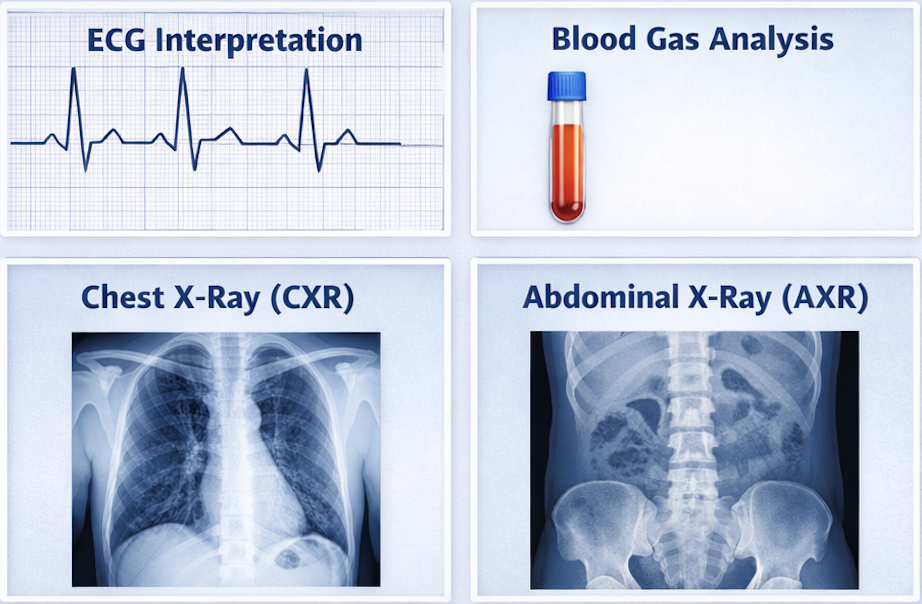
- ECG interpretation
A systematic approach to recognizing life-threatening and common ECG abnormalities, including acute coronary syndromes, arrhythmias, conduction abnormalities, and electrolyte-related changes. - Arterial and venous blood gas interpretation
Step-by-step analysis of acid–base disorders, oxygenation, ventilation, and metabolic derangements and compensatory mechanisms, with clinical correlation and real-world cases. - Chest X-ray (CXR) interpretation
A structured method for identifying critical pathology such as pneumothorax, consolidation, pulmonary oedema, effusions, lines, tubes, and acute thoracic emergencies. - Abdominal X-ray (AXR) interpretation
Recognition of bowel obstruction, perforation, toxic megacolon, volvulus, and other key abdominal pathologies relevant to emergency care.
Who the course is for:
- Foundation doctors, core trainees, and registrars
- Final year medicine undergraduate students
- International medical graduates
- Emergency medicine, acute medicine, and surgical trainees
- Any clinician seeking to improve confidence and accuracy in acute investigation interpretation
Teaching approach:
- Consultant-led teaching
- Case-based, interactive sessions
- Clear frameworks and practical tips applicable to real clinical scenarios
- Emphasis on recognizing red flags and time-critical findings
By the end of the course, participants will have increased confidence, speed, and accuracy in interpreting ECGs, blood gases, CXRs, and AXRs—skills that directly impact patient safety and outcomes in emergency care.

Reviews
There are no reviews yet.